

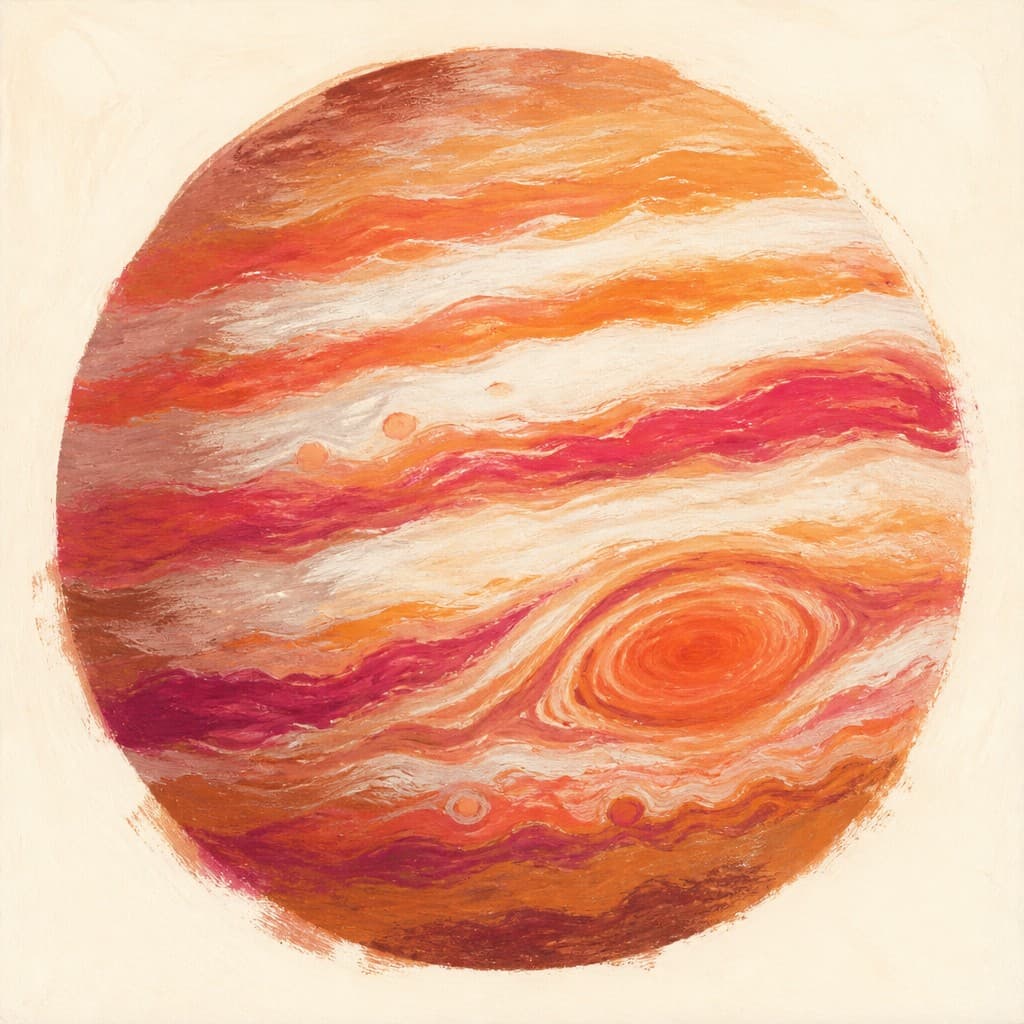

Meaning, not a luck machine
People often associate Jupiter with luck, but Jyotish gives it a wider meaning. Jupiter signifies teachers, children, faith, law, higher study, judgement, and the fifth and ninth house themes of merit and dharma.
It tends to expand what it touches. A well-placed Jupiter may support growth, while a difficult placement may enlarge a problem or encourage more confidence than the facts justify. A reading checks Jupiter's actual role in the janam kundli and the current period.
Jupiter dasha and the years that open
A Jupiter mahadasha can make study, travel, children, teachers, faith, or purposeful work more important. It can also bring too much advice, optimism, or expansion without enough detail.
The outcome depends on the house Jupiter occupies, the houses it rules from the lagna, its aspects, and its condition. For example, a Jupiter period connected with a strong ninth house differs from one connected with a troubled fifth house.
Children, teachers, and dharma
Questions about children, study, religion, law, long travel, and the search for a teacher often run through Guru.
So do questions about whether a life is for something. That last one is easy to fake in spiritual copy. The reading stays with the fifth and the ninth, with Jupiter's sign and nakshatra, and with the dasha. Dharma here is not a brand. It is the ninth house, the teachers you meet, the principles you will not bargain, and the luck that looks like timing rather than a prize.
Grace still needs a chart
Jupiter is a natural benefic, but it does not override Saturn, Mars, Rahu, Ketu, or a weak lagna.
It is one graha among nine and must be read with the whole chart. Bring your date, exact time, and place of birth so the sidereal kundli can be calculated, then ask about study, children, teachers, law, faith, or another matter connected with Guru.
